
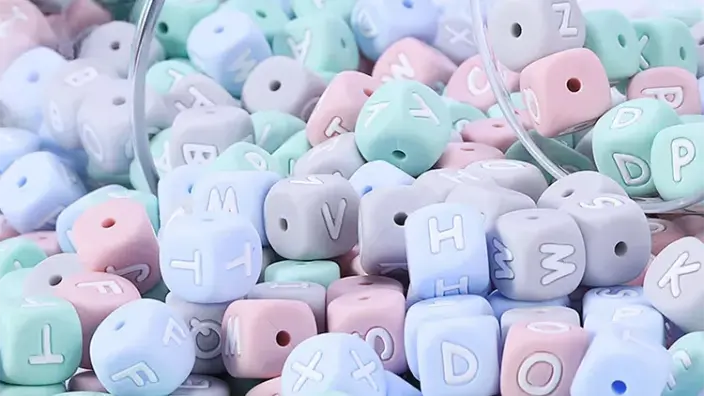
A silicone material label does not establish that beads are safe for a baby. Loose beads and parts that detach from an assembled product can present a choking risk; cords and wearable designs need a separate assessment of strangulation risk. A food-contact report cannot establish the safety of a teether or pacifier clip.
This guide separates material evidence from the finished-product checks a parent or baby-product buyer needs. It does not certify any SANNYIN bead or assembled baby product.
Are loose silicone beads safe for babies?
Do not give loose beads to a baby to chew or play with. Softness and a “food-grade” label do not remove the risk of a small object entering the airway.
For covered products intended for children under three, the U.S. small-parts regulation, 16 CFR Part 1501, evaluates the article itself and components that can detach or break off during specified use-and-abuse testing. A material report does not perform this assessment. Product classification, exemptions and other applicable requirements must also be checked; this rule is not a complete baby-product compliance checklist.

What changes when beads are assembled into a product?
An assembly needs evidence for its actual design, not just the beads. The cord, knots, clip, fasteners and every detachable part are part of the assessment.
The FDA’s guidance on teething pain and sensory needs reports deaths and serious injuries, including choking and strangulation, caused by teething jewelry. A claim about silicone chemistry does not address these hazards. Do not treat a necklace or bracelet as a safe teething aid because its beads are silicone.
| Product being considered | Evidence to request | What a bead material report cannot establish |
|---|---|---|
| Loose beads sold for making accessories | Intended customer, age restrictions and clear identification as components | Suitability for a baby to handle or mouth |
| Assembled teether | Exact design and age group, applicable chemical and mechanical assessments, and finished-product test results | Resistance to breakage or release of small parts |
| Pacifier clip or corded accessory | Intended function, cord and attachment assessment, applicable market requirements and finished-product results | Safe cord length, secure fastening or absence of strangulation hazards |
| Teething necklace or bracelet | Review the FDA warning before considering this use | Safety as a teething aid |
Supervision and inspection do not substitute for a suitable product design or applicable testing.
What does material evidence actually show?
“BPA-free,” “lead-free,” “food-grade” and “hypoallergenic” are different claims. A report must identify the sample and the substances or properties assessed. Passing one test cannot establish the others, and a result for one formulation or color does not automatically cover another.
The FDA’s food-contact regulatory guidance explains that compliance depends on the components and their authorized intended use, including specifications and limitations. Food-contact compliance is not a general FDA approval of a baby accessory, nor does it establish mechanical safety.
No bead-specific chemical or finished-product safety report is presented here. A silicone mat report with no identifiable sample page, or a report for a silicone stretch lid, cannot substantiate a claim about these beads. This article therefore makes no SANNYIN bead-specific lead-free, Proposition 65, FDA, LFGB or toy-standard compliance claim.
What should a buyer ask the supplier?
Before purchasing for an infant product, define the final assembly, target age, intended use and destination market. Ask for:
- Traceability between the ordered bead formulation, colors and batches and the samples in the reports.
- Complete reports naming the sample, test method, test date, results and relevant limitations; a cropped certificate image is insufficient.
- A separate assessment of the finished assembly, including detachable parts, cord hazards and foreseeable damage.
- Instructions and warnings for that finished product, including cleaning, inspection and retirement criteria.
Have the applicable requirements and evidence reviewed for the actual product category. A list of standards without matching results does not answer whether that product meets them.

How should an assembled product be cared for?
Follow the finished-product manufacturer’s instructions. Do not assume every bead assembly can be boiled, sterilized or washed in a dishwasher: the cord, clip and other components also matter. Stop use if parts loosen, break or show damage, and keep loose components away from babies.
Cleaning can maintain hygiene; it cannot correct a choking or strangulation hazard. For teething discomfort, the FDA guidance above describes alternatives and advises supervision when using a teething ring. Seek advice from a child’s health professional when needed.
Conclusion
Choose evidence for the intended finished product. Silicone composition, softness and a food-contact label do not establish that loose beads, a teether, a pacifier clip or a necklace are safe for a baby. Without matching chemical and mechanical evidence, that safety conclusion remains unverified.
Revision scope: replaced the material-only safety assurance with product-specific evidence requirements and choking/strangulation limits; removed unrelated report imagery and unsupported compliance claims.