
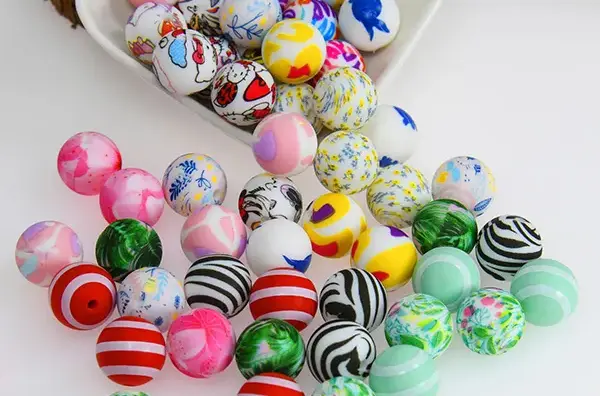
Silicone bead production runs from material and colour selection through molding, any required post-curing, decoration, inspection and packing. The process specification must match the actual compound, bead design and intended use; this sequence is not a safety certificate for a finished baby product.
The following seven stages provide a checklist for discussing a silicone bead order. Temperatures, times, tolerances and test limits must come from the approved material and production specification, rather than from a generic article.
1. Select the silicone material
Identify the compound, supplier and intended use. Ask which material documents and reports apply to the proposed formulation, colour and finished item. A “food-grade” label by itself does not establish that every bead or assembly meets every market requirement.
Record the approved material identity so later batches can be checked against the same specification. For material background, Shin-Etsu’s silicone rubber properties guide discusses rubber compounds and their different properties. It is not a report for the beads you are ordering.

2. Select and mix the colour
Agree the colour reference and the compound/colourant combination before sampling. The production record should identify the approved formulation and batch. Judge the colour on an actual bead sample; a screen image is useful for discussion but should not be the sole acceptance reference.
Ask whether a change of colourant, finish or supplier changes the scope of any existing test documentation.
3. Mold and cure the bead
In compression molding, material is placed into a mold and cured under the specified process conditions. For the order, confirm the mold version, bead geometry, hole dimensions and the points at which flash or molding marks are acceptable.
The compound’s processing instructions and the validated mold process determine the settings. Do not use a general cure temperature or cycle time for every bead. Approve dimensional and appearance samples before releasing the design for volume production.
4. Apply post-curing where specified
Whether post-curing is needed, and how it is performed, depends on the compound and product requirements. Obtain the material supplier’s processing instructions and the agreed production route.
A statement that a part was post-cured is not proof of FDA approval, LFGB compliance or the safety of the final assembly. Ask for the applicable requirement and report covering the actual object and conditions.
5. Add the pattern or decoration
Confirm whether the proposed effect is molded into the bead or printed onto it. Artwork, number of colours, registration and surface coverage need to be assessed on the actual shape. A photo of one decorated design does not show that every design can use the same process.
For printed work, agree the ink system, sample and durability checks. See screen-printing files and production steps and the silicone printing compatibility guide.

6. Inspect against the approved specification
| Inspection topic | What the order should define |
|---|---|
| Material and colour | Approved material identity, colour reference and batch traceability |
| Dimensions | Bead size, hole geometry, tolerances and measurement method |
| Appearance | Agreed samples and limits for flash, marks, contamination and decoration defects |
| Mechanical or chemical testing | Intended product, applicable requirement, test method, sample identity and acceptance limit |
| Records | Which results and reports are supplied with the order and how batches are identified |
The table defines information to agree, not test results already obtained. Loose beads and assembled teethers or clips require different considerations. Assess the finished product’s mechanical and small-part risks separately; a material or silicone-mat report cannot establish the safety of every bead assembly.
7. Pack and identify the batch
Agree quantity per pack, labelling, lot identification and the protection needed for the product and shipping route. Confirm any market-specific warnings or instructions for the finished product rather than copying them from an unrelated item.
Before dispatch, compare the packing list and inspection records with the approved order. Send your drawing, pattern, intended use and target market when requesting bead samples, so the quotation can identify what needs to be confirmed.
Revision note: Replaced blanket safety and testing assurances with a traceable seven-stage order checklist; removed the undated promise of a future “new technology” article.