
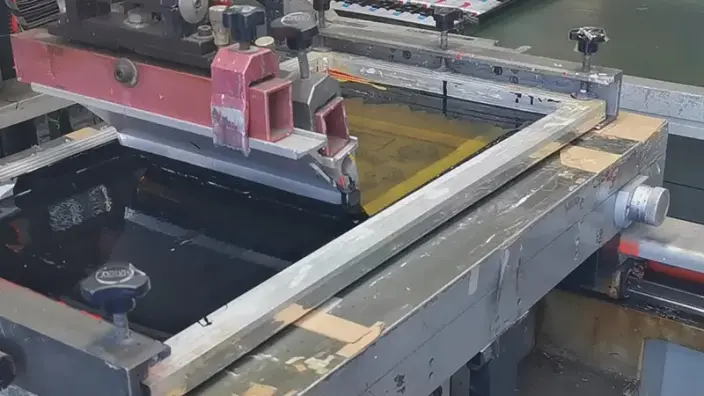
For a silicone screen-printing quotation, provide the part drawing or sample, editable artwork, print location, colour references, quantity and intended use. Production should follow approval of an actual printed sample and an agreed acceptance specification.
This article covers buyer inputs and the production sequence. For ink/substrate selection and defect investigation, see the silicone screen-printing compatibility and troubleshooting guide.
What files and information should a buyer provide?
| Input | What it should identify |
|---|---|
| Part drawing or sample | Dimensions, material, surface finish and the area available for printing |
| Artwork | Editable vector artwork where available; include fonts or convert text to outlines |
| Print layout | Position, orientation, size and the reference features used to locate the design |
| Colours | Colour-system reference or an approved physical sample, plus the substrate colour |
| Order details | Quantity, variants, packaging and required delivery date |
| Intended use | Handling, flexing, cleaning and any food-contact, child-use or other product requirements |
A PDF is a container, not proof that artwork is editable vector data. A raster image can communicate an idea, but its suitability for production must be assessed; redraw work may be needed. Ask the printer to confirm the file and detail limits for the actual part rather than assuming every image is production-ready.

How does the design become a printing screen?
The approved artwork is separated as required for the print colours and used to prepare the stencil. In a photographic screen-making process, film and a light-sensitive coating define which areas of the mesh will transfer ink.
Approve the print size, registration and placement before screen preparation. The shape and flexibility of the molded part also affect how it can be held during printing. A flat artwork preview cannot show every limitation of a curved or textured surface.

How are ink and colour approved?
Confirm that the proposed ink system is suitable for the actual molded substrate and intended use. Obtain the supplier’s technical and safety instructions for mixing, preparation, curing and handling. Do not prescribe a universal curing temperature or substitute UV/air drying for a specified process.
A Pantone reference is a useful communication input, but the approval should describe the actual printed result on the proposed substrate. Agree the viewing and acceptance conditions and retain an approved physical sample when colour matching matters.

What happens during printing and curing?
The following is an approval sequence, not a fixed recipe for every ink and silicone grade:
- Confirm the drawing, material, artwork and sample requirements.
- Prepare and handle the surface according to the selected system’s instructions.
- Locate the part in the agreed fixture and print the artwork.
- Cure using the ink supplier’s required process; record how the part receives that exposure.
- Inspect the sample against the agreed appearance, dimensions and performance criteria.
- Release the approved version for production and retain its traceability records.
Shin-Etsu’s silicone rubber properties guide describes different substrate properties and exposure responses. It does not supply an ink cure schedule or certify a decorated product. Use the ink’s own current data sheet and an actual part trial for that decision.
What should sample acceptance cover?
| Check | Agree before sample approval |
|---|---|
| Artwork and placement | Version, print dimensions, location and registration limits |
| Colour and appearance | Physical reference, viewing conditions and acceptable surface defects |
| Adhesion and durability | Relevant test method, conditioning, exposure and pass criteria |
| Use-specific requirements | Which finished-item evidence is needed for the intended market and application |
| Production control | Approved sample identification and changes requiring a new approval |
The checks are requirements to define, not results claimed by this article. A print that survives one demonstration is not proof of all cleaning, abrasion or safety claims. See the troubleshooting guide when a trial fails.
Which products and alternatives can be discussed?
Existing project types include silicone mats, keypads, wristbands and other molded items. Suitability depends on the design and requirements; no single printing method is best for every geometry or effect.
For a colouring-mat project, start with the design ideas guide and the custom colouring-mat page. If screen printing does not fit the artwork, ask for an assessment of other decoration methods rather than assuming they share its inks, setup or acceptance limits.
Contact SANNYIN with your files, part details and intended use to identify the sample and quotation requirements.
Revision note: Reworked the article as an RFQ and approval guide; clarified artwork requirements, colour approval and ink-specific curing, with a separate link for compatibility and troubleshooting.